
Call us: 1-800-927-5107 647-494-7800 ext. 1008

How to Choose a Handheld Fiber Laser Welder

Laser welders are categorized by output power and cooling systems.

For fabrication, we recommend a minimum output power of 2000W.

Cooling systems can be divided into water-cooling, air-cooling, and the new Ascent refrigerated heat pump.

The disadvantage of air cooling is that the operator must allow the machine to cool down after a few hours of operation.

Water cooling requires regular maintenance.

In contrast, the Ascent refrigerated heat pump requires no maintenance and can operate continuously, 24/7.

Output power is crucial when choosing a laser welder to match the machine's output to your materials and their thickness.

For example, the Ascent 2000W laser welder can weld aluminum from 0.030" to 0.27".

Wire feeder: Laser welding melts the two parts together; if there is a gap, a wire feeder is needed. The feeder is integrated into the

machine's operation, ensuring it can use industry-standard wires available from any welding supplier.

The welding torch features a "Wobble Head" that oscillates the laser beam, creating a wider weld.

This feature is highly recommended for structural parts, as it improves weld strength.

The welding torch should be as lightweight as possible to prevent operator fatigue.

Additionally, you will need a supply of protective lenses (for aluminum, this should be changed every few weeks)

and different nozzle shapes, depending on the weld geometry.

Laser safety is paramount; ensure you are provided with safety glasses rated OD 7 or 8, a fiber laser helmet, and gloves.

In the US, the laser welder needs to be FDA certified.

Support is also important; verify that the company offers a 2-year warranty in North America and a supply of consumable parts.

Operator learning curve: Typically, learning to operate the laser welder only takes a few hours. However, it would be beneficial if the company could provide training at your facility.

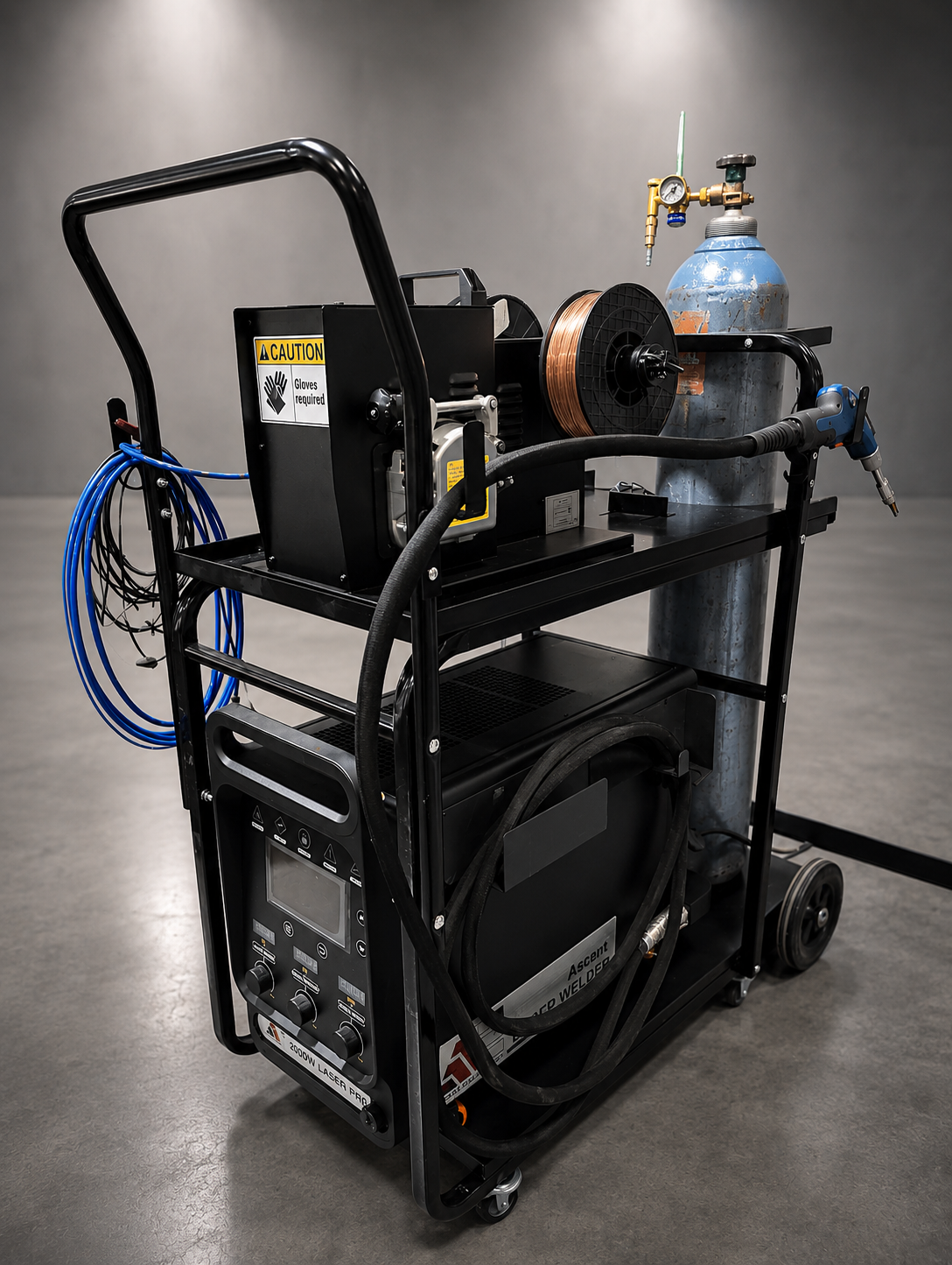
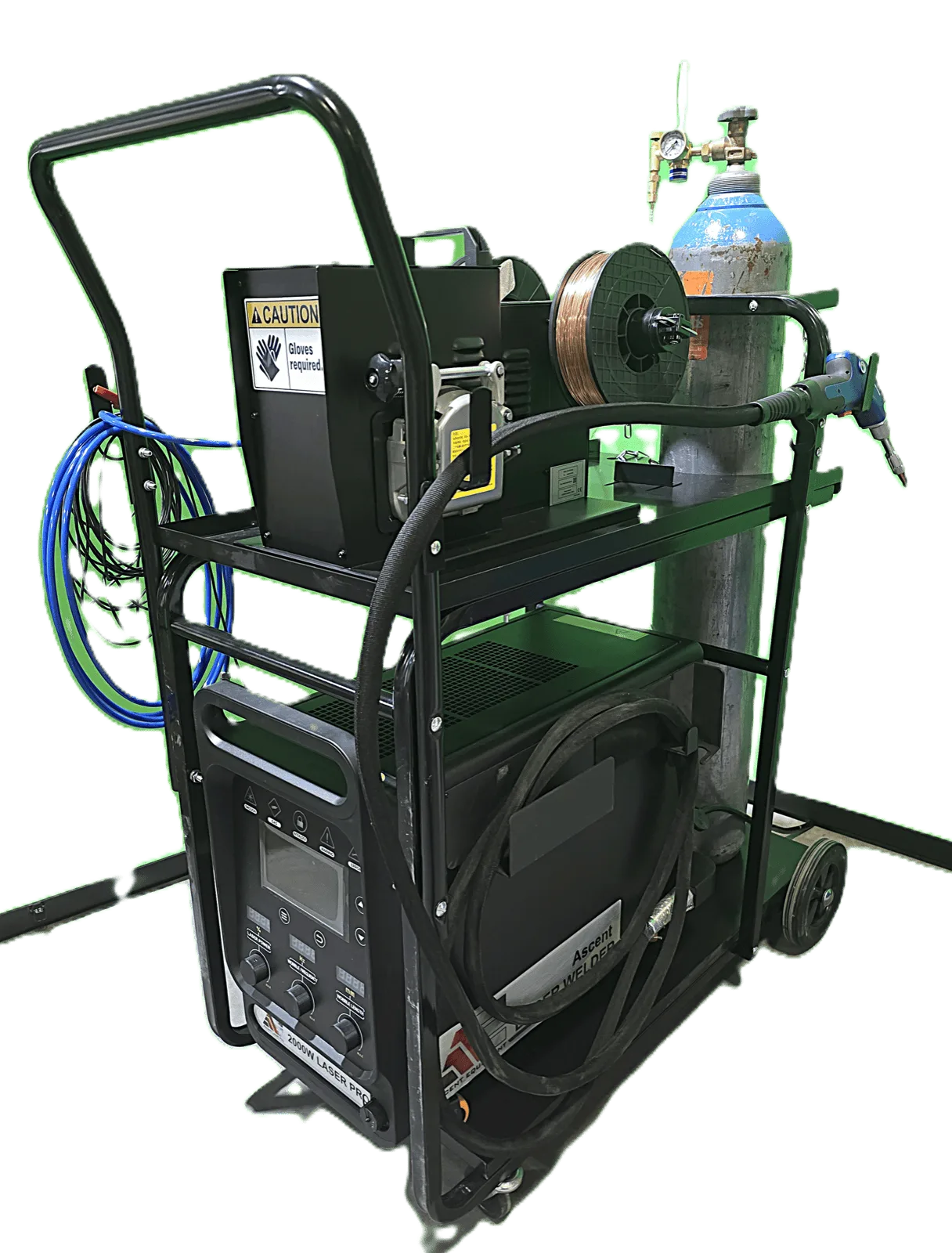
Feature: another feature is to get the machine with a trolley that can accommodate the laser welder, the wire feeder, and an inert gas tank.

For more information: https://ascentequipment.com/refrigeration-laser-welders/

Dave Rom

President and chief engineer
dov@ascentge.com

← All articles
More from Ascent

Related articles

QCW Tabletop vs. Handheld Fiber Laser Welder: Which Is Right for Your Sign Shop?
A direct comparison of the Ascent QCW tabletop laser welder and the 2000W handheld fiber laser welder — applications, heat input, speed, and which sign shops should buy which.
CO₂ vs. Fiber Laser Cutters for the Sign Industry: Which Technology Is Right for Your Shop?
A direct comparison of CO₂ and fiber laser cutting technologies for sign companies — materials, edge quality, speed, operating costs, and when to run both.
Channel Letter Materials Guide: Aluminum Gauges, Extrusions, and Profiles
A complete reference guide to channel letter materials — aluminum coil gauges, extrusion profiles, face materials, back panels, and hardware — and how each choice affects the finished letter.
How to Make Reverse Halo Channel Letters
A practical guide to fabricating reverse halo (backlit) channel letters — components, bending, LED placement, standoff distance, and how to skip the welding step entirely.
How to Make Trimless Channel Letters
A step-by-step guide to fabricating trimless channel letters using Ascent aluminum extrusion profiles — faster, cleaner, and no trim cap required.
How to Reduce Labor Costs in Your Sign Shop
Practical ways sign shops reduce labor costs without cutting staff — from eliminating manual steps to choosing equipment that runs with less supervision.
How to Start a Channel Letter Fabrication Business
A practical guide to starting a channel letter fabrication business — equipment, space, skills, pricing, and how to land your first customers.
Laser Welder vs TIG Welder for Channel Letters
A direct comparison of laser welding and TIG welding for channel letter production — speed, weld quality, skill requirements, and which makes more sense for your shop.
Why Choose Ascent Equipment Over the Competition
What sets Ascent Equipment apart from other channel letter bending machine suppliers — specific capabilities, pricing transparency, and support that other companies don't offer.

Let Ascent Experts Assemble All the Pieces of The Equipment Puzzle for your Company

Contact us